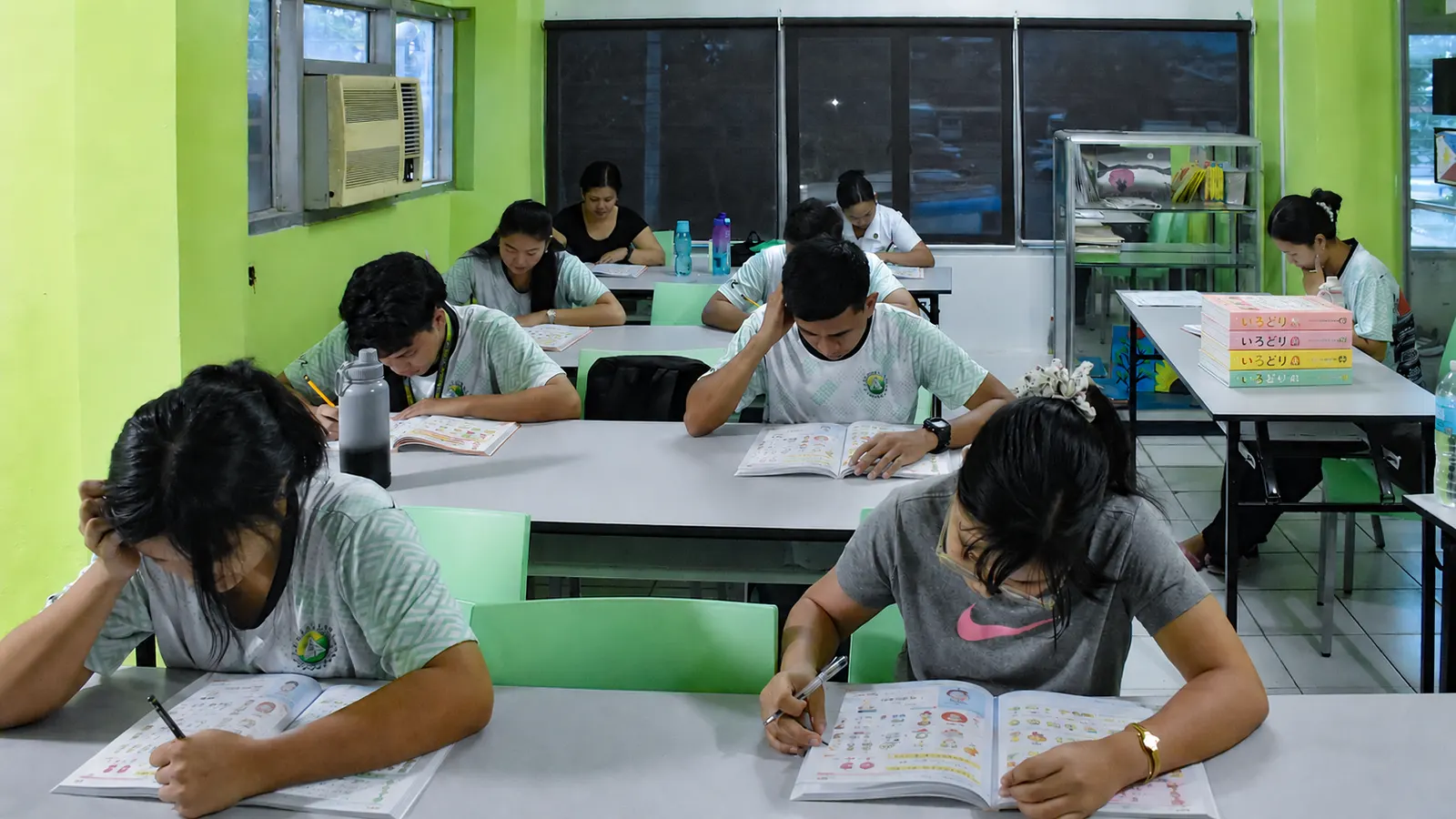
Irodori-Focused Curriculumいろどり中心のカリキュラム
Old Way vs. The Way We Teach
Why Grammar Alone Doesn’t Work
Ask someone who studied Japanese the old way, and they can recite the grammar rules by heart. Ask them to order food at a Japanese counter, and they freeze.
That’s the problem with the old style of teaching, the one built around passing a written exam. It fills your head with rules but doesn’t train your mouth to speak. At Philippine College of Technology, we use a different coursebook called Irodori. It was made by the Japan Foundation, the same organization that runs Japanese language and culture programs worldwide, and it’s built around real situations you’ll actually be in, not just grammar drills.
How the Two Compare
| Old Way (Grammar First) | Irodori (What We Use) | |
|---|---|---|
| What you’re learning for | Passing a written test | Speaking and understanding real Japanese |
| How grammar is taught | You memorize the rule, then try to use it | You hear real conversations first, then figure out the rule yourself |
| What you practice with | Textbook dialogues that don’t sound like real speech | Real audio recordings, real chat messages, real store flyers, real work schedules |
| Speaking style you learn | Formal, textbook Japanese | The way people actually talk day to day, plus formal Japanese when you need it |
| Cost of materials | Often needs a separate paid textbook | Included as part of your course materials — published by the Japan Foundation |
| How you’re tested | Multiple choice grammar and reading, twice a year | Listening, reading, and real conversation skills, offered several times a year |
Irodori is also the coursebook the JFT-Basic exam itself is based on. The people who wrote the textbook are the same people who designed the test. Source: jpf.go.jp
This is why we build our classes around Irodori and around speaking with you directly, instead of handing you a grammar book and a set of flashcards.
What This Certificate Actually Opens for You
For a Filipino who wants to work in Japan, JFT-Basic isn’t just another certificate. It’s one of the two accepted ways to meet the Japanese language requirement for Japan’s Specified Skilled Worker (SSW) visa, the visa category most Filipino workers use to take on jobs in Japan like caregiving, food service, construction, and factory work.
Here’s the direct benefit:
To qualify for that visa, you have to prove two things. You can do the job, a separate skills test for your field. And you can speak enough Japanese to get through daily life and work. For the language part, you can take either the JLPT N4 or the JFT-Basic. Most candidates choose JFT-Basic because it’s held far more often, several times a year instead of twice, and you get your result in about 5 business days instead of waiting months. Source: treeglobalpartners.com
The pass mark is 200 out of 250 points, which lines up with the A2 level Irodori is built to teach. So a student who finishes our program isn’t just passing a test. They’re at the actual language level Japan requires for this visa. Source: jpf.go.jp
What This Doesn’t Guarantee
Passing JFT-Basic does not guarantee a visa or a job. The exam proves your language level. The actual hiring, visa application, and deployment are handled separately, by the employer or the licensed agency involved, not by the language school. Source: prometric-jp.com